A sourcing quotation is a set of assumptions as well as a price. Before approval, confirm the product version, quantity, packaging, delivery basis, quality evidence, payment conditions, exclusions, and change rules. A structured review makes competing offers comparable and exposes risks before they enter a purchase order.
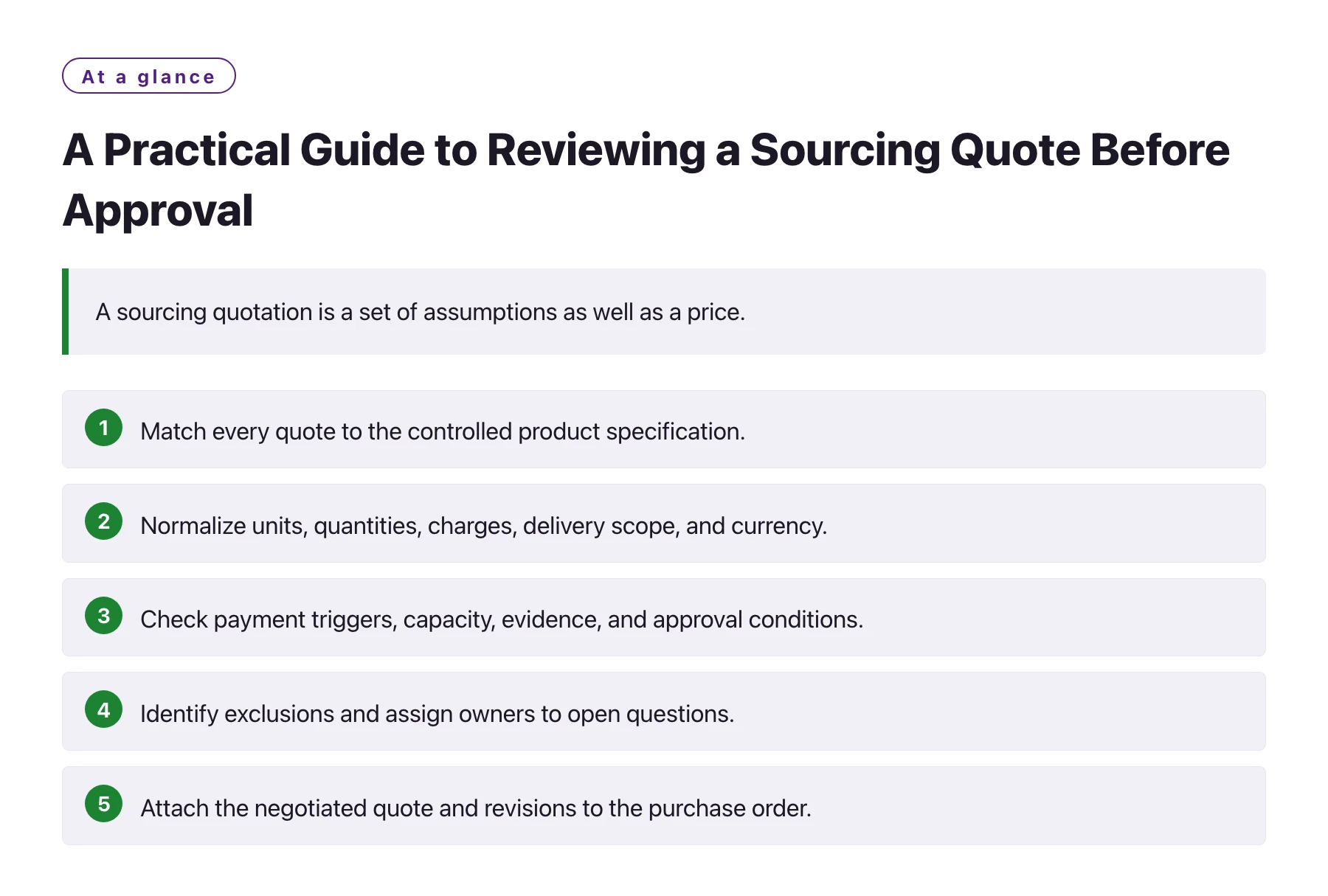
Key takeawaysMatch every quote to the controlled product specification. · Normalize units, quantities, charges, delivery scope, and currency. · Check payment triggers, capacity, evidence, and approval conditions. · Identify exclusions and assign owners to open questions. · Attach the negotiated quote and revisions to the purchase order.
A clear approval record ties the chosen price to a complete product and delivery scope.
1. Confirm that every supplier priced the same product
Match each quotation to a controlled specification, drawing, model, revision, material, finish, packaging, destination, and quantity. Identify variants and options as separate lines. A quote that looks cheaper may omit features or assume a different product.
Ask suppliers to list substitutions and open questions. Do not silently reconcile different assumptions in a spreadsheet. Put the buyer-approved configuration beside every quoted price so commercial comparison remains tied to the intended product.
Check whether the quote specifies tolerances, approved alternatives, and the product documentation included. If a supplier proposes a substitute, compare its technical and regulatory status before treating the price as equivalent. Keep clarification responses linked to the exact offer version.
2. Normalize the price structure
Separate unit price, tooling, molds, samples, setup, testing, packaging, inspection, spares, and other one-time charges. Confirm price breaks, minimum order, quantity tolerance, currency, validity period, and taxes or duties excluded. Check whether the price is per piece, set, carton, or another unit.
Build a like-for-like total using consistent quantities and cost assumptions. Include yield, custom packaging, payment fees, and likely handling needs when they differ. Highlight estimates separately from firm charges.
3. Check delivery terms and named places
Record production lead time, ready date, shipment window, mode, port or address, and what starts the lead-time clock. Specify the trade term with its exact named place and edition. ICC Incoterms® rules clarify certain delivery tasks, costs, and risks, but do not replace specifications, payment terms, or the full sales contract. [1]
Confirm who books freight, handles export and import formalities, arranges insurance, loads or unloads, and pays destination charges. Ask a logistics specialist to review an unfamiliar or unusual proposal. Do not compare an ex-works price with a delivered price as if they had the same scope.
4. Compare payment and order conditions
Review deposit, balance triggers, documentary conditions, payment method, credit terms, cancellation, postponement, quantity variation, and late-delivery remedies. Link payment milestones to objectively verifiable events such as approved sample or completed inspection, if agreed by the parties.
Check whether tooling and molds belong to the buyer, how they are identified and stored, who pays maintenance, and whether suppliers may use them for other orders. Clarify ownership, access, and end-of-project arrangements in the contract.
5. Confirm production and capacity assumptions
Ask which factory and subcontractors will perform the work, current capacity, seasonal loading, material availability, and any production constraints. Compare offered lead time with actual project milestones and required approvals.
Ask the supplier to state assumptions about production start, sample approval, document readiness, and buyer response time. A quotation should identify dependencies instead of presenting a best-case date without conditions.
6. Include quality and evidence costs
Specify sample charges, test costs, inspection stages, reporting, rework, replacement, and approval responsibilities. Confirm the quality plan and acceptance criteria are quoted, not added after order placement. Separate compliance documentation from general marketing materials.
For high-risk requirements, identify qualified reviewers and needed laboratory work before price award. If evidence is missing, label the offer conditional and assign an owner and deadline rather than treating it as complete.
7. Review packing and documentation
Check carton or bundle design, marks, product identifiers, quantity, dimensions, gross mass, pallet, packing list, invoice, certificates, and destination documents. Ensure these assumptions match the physical product and shipment plan.
Ask how damage, shortage, defects, and document errors will be reported and resolved. Packaging and paperwork should be included in the quote comparison because they can affect customs handling, storage, and receiving cost.
8. Identify exclusions and commercial risk
Ask what is explicitly excluded: engineering, artwork, translation, extra samples, testing, special labels, compliance review, installation, spare parts, storage, insurance, or destination delivery. Read quote footnotes, currency clauses, and price escalation triggers.
Mark uncertain, conditional, or expired prices. Set a final clarification date and obtain written responses. A verbal promise does not amend the price or scope unless captured in the contract or approved order.
9. Prepare an approval summary
Summarize supplier, product revision, price basis, total assumptions, lead time, payment, quality plan, compliance gaps, delivery term, exclusions, risks, and decision owner. Compare technical compliance before commercial preference so a low bid cannot mask a critical gap.
Buyers using js-sourcing.com can review quote assumptions alongside supplier communication, samples, inspection scope, and delivery coordination. Keep the approved quotation attached to the final purchase order and note every negotiated revision.
Before signing, reconcile the quotation line by line with the purchase order. Resolve differences in dates, quantity, model, pack, price, delivery point, and inspection before funds or production are committed. Record who approved any remaining exception.
Sources
Frequently asked questions
What should buyers check first in a sourcing quote?
Confirm that product identity, specification revision, quantity, packaging, destination, and required evidence match the RFQ.
How do buyers compare quotes with different delivery terms?
Normalize them to the same named destination and identify freight, insurance, clearance, unloading, and local charges.
Should a low quote be accepted if documents are missing?
Treat it as conditional until required evidence is reviewed, and assign a responsible owner and due date.
What belongs in the approval record?
Keep the final quote, clarifications, approved scope, price assumptions, delivery basis, open risks, and authorized decision together.